The Road to Your First Chart
It always starts the same way
You're the Last One Not Doing It
It doesn't start with a grand plan.
You graduate, get a job, collect a paycheck. Investing is someone else's world. Something adults do. You don't realize you already are one.
Payday hits and your balance glows for exactly one day. Then rent, insurance, phone bill, Netflix, credit card. Your paycheck is a guest that stops by your account to say hi and leaves. What comes in goes out. Every month. Same cycle.
Then you hear it at lunch. "You see crypto this week?" "I made 30% last month." You brush it off at first. But it keeps coming. It's not just one person. Everyone seems to be doing it.
When your bank account resets every month, "30% in one month" hits different. Doesn't matter if it's a big number or small. The idea that something grows outside your paycheck is brand new. You do the same job every day, but money just moves on its own? Hard to ignore.
At some point it clicks. You're the last one not doing it.
Then the moment comes. Someone pulls out their phone and shows you their returns. Green numbers. Plus some percent. You feel it all at once. Envy, urgency, the sense that you're falling behind.
But they never show you the red screen. Only the green days. On loss days, the phone stays in the pocket. You don't know that yet.
You get home and open YouTube. "How to start investing." Some people even use incognito mode because the search history feels embarrassing. You don't tell anyone. Admitting you don't know this stuff is too much.
YouTube's algorithm is generous. Watch one video, the next one pops up. The thumbnail says "$500 to $50,000 in 3 Months." When your bank account resets every month, how does that thumbnail look to you? You can't not click.
Here's the thing about these YouTubers. Their income doesn't come from trading. It comes from views. To get views, you show people what they want to see. So they show the highlight reel. Cut the complexity, paste in a nice profit graph, and say "just follow these steps." You follow the steps. You still don't understand what's happening. But the person in the video makes it look so easy.
Somewhere in there, you download an app. Not after some careful comparison. It just caught your eye.
Sign-up takes three minutes. These apps are incredibly friendly. ID verification, bank link, deposit. They make it so easy a child could do it. The path for money coming in is buttery smooth. Nobody tells you about the path for money going out.
You put in a small amount and stare at the screen. Green and red, back and forth. Your heart speeds up a little. You don't know what to buy. You don't know what to look at. But you're in.
At this stage, your teacher is a YouTuber. The communication is strictly one-way. The video plays, you listen. You type a question in the comments. Nobody answers.
In this world, you're still alone. And nobody knows it.
Your First Analyst Was Your Coworker
Once the solo YouTube phase passes, you start looking around.
Lunch breaks, coffee runs. When investing comes up, you're no longer tuning it out. Who bought what, what's up, what someone saw on the news. Thanks to your YouTube teachers, the jargon sounds familiar now.
Here's the funny part. Everyone around you is at the same level. They all watched some videos, downloaded an app, threw in a small amount. They know roughly the same things, and none of them realize how little that is. These people start finding each other.
"Hey, this ticker looks good." "I saw this sector trending on the news." Stock tips start flying around. The basis? Something someone heard somewhere. A post someone saw on social media. That's it.
But being in the group feels safe. Trading alone was nerve-wracking. When everyone buys the same thing, it feels like the right call. If you're wrong together, it hurts less. For now.
Then it happens. A pick from the group actually goes up. 20%, 30%. Everyone's hyped. Nobody stops to think that a broken clock is right twice a day.
That one win changes everything. "I might actually be good at this." It was luck. But nobody thinks it was luck. Everyone believes it was their judgment. The imagination is already miles ahead. You're signing a lease on a luxury apartment, you're a Bentley owner. In your head you're already looking down from a Manhattan penthouse, tossing the keys to the valet. Meanwhile, back in reality, your account is up a few dozen dollars.
This is how investment decisions work at this stage. Someone says something. You search it. You look at a chart for three seconds. You buy. It's not analysis. It's a reflex. But you think it's analysis.
News breaks that the Strait of Hormuz is blocked. How that affects oil prices, how oil connects to the broader market. You don't have that skill yet. You read the headline, think "this is gonna pop," and buy. You look at a chart. A daily candle. That's all you know at this stage. It's going up, so you buy. Or it dropped, so you buy. Neither has any real basis. It's a feeling.
You haven't been seriously hurt yet. The amounts are small. When you lose, you call it "tuition."
The real tuition bill comes in the next stage.
Something's Wrong and You Can't Figure Out What
It doesn't take long to get here.
A pick from the group drops. "Just a pullback." It drops more. "It'll bounce." It drops more. You used to check the app every hour. Now you stop opening it. If you don't look, you didn't lose. But you're still losing.
This feels different from the losses you brushed off as "tuition." Your confidence had grown, so you put in more. You don't realize yet that the confidence was the problem.
You don't know whether to cut your losses or hold. You don't know why you bought it, so you don't know why it's falling. For the first time, you ask yourself: "What am I doing wrong?"
So you start doing something. You start taking daily candles seriously. You open a financial statement for the first time. Revenue, operating income, debt ratio. Numbers everywhere. You don't actually know which ones are good. But you're reading them, and before long you catch yourself nodding along. "Oh, so that's why it went up." "This number explains that." You're not understanding. You're just agreeing with yourself. You don't know the difference.
You find analyst reports. "Price target: $150." An expert wrote $150, so it must go to $150. You don't know why the vast majority of analyst reports are buy ratings. You don't yet understand the structure. Coverage needs to be maintained. Relationships need to be preserved. So they write "buy."
You did your homework this time. Checked the financials, read the reports, looked at the chart. You have reasons now. Confidence rebuilds. You hit buy. Same result.
Somewhere along the way, someone told you to try value investing. Find undervalued stocks, buy them, wait. So you found one. Looked cheap by every measure. You bought it. One month. Two months. Three months. It doesn't move. It wasn't undervalued. It was cheap for a reason. There's no such thing as a free discount.
You get tired of waiting. You start chasing volatile stocks again. Movement feels better. Feels better than sitting still. And you lose again.
This is when you feel it for the first time. Effort and results don't always go together. You studied and still lost. You analyzed and were still wrong.
You know something's wrong. You just can't figure out what.
Better Setup, Better Results. Right?
You can't figure out why you're losing, so you decide to change the environment.
The phone screen is too small. You can't see the chart properly. So you buy a tablet. Or you add a second monitor at home. Dual screens. Chart on one side, news on the other. The desk looks legit. You feel like a trader. Your skill is the same as yesterday, but your gear got upgraded today.
This is when a big shift happens. You discover timeframes.
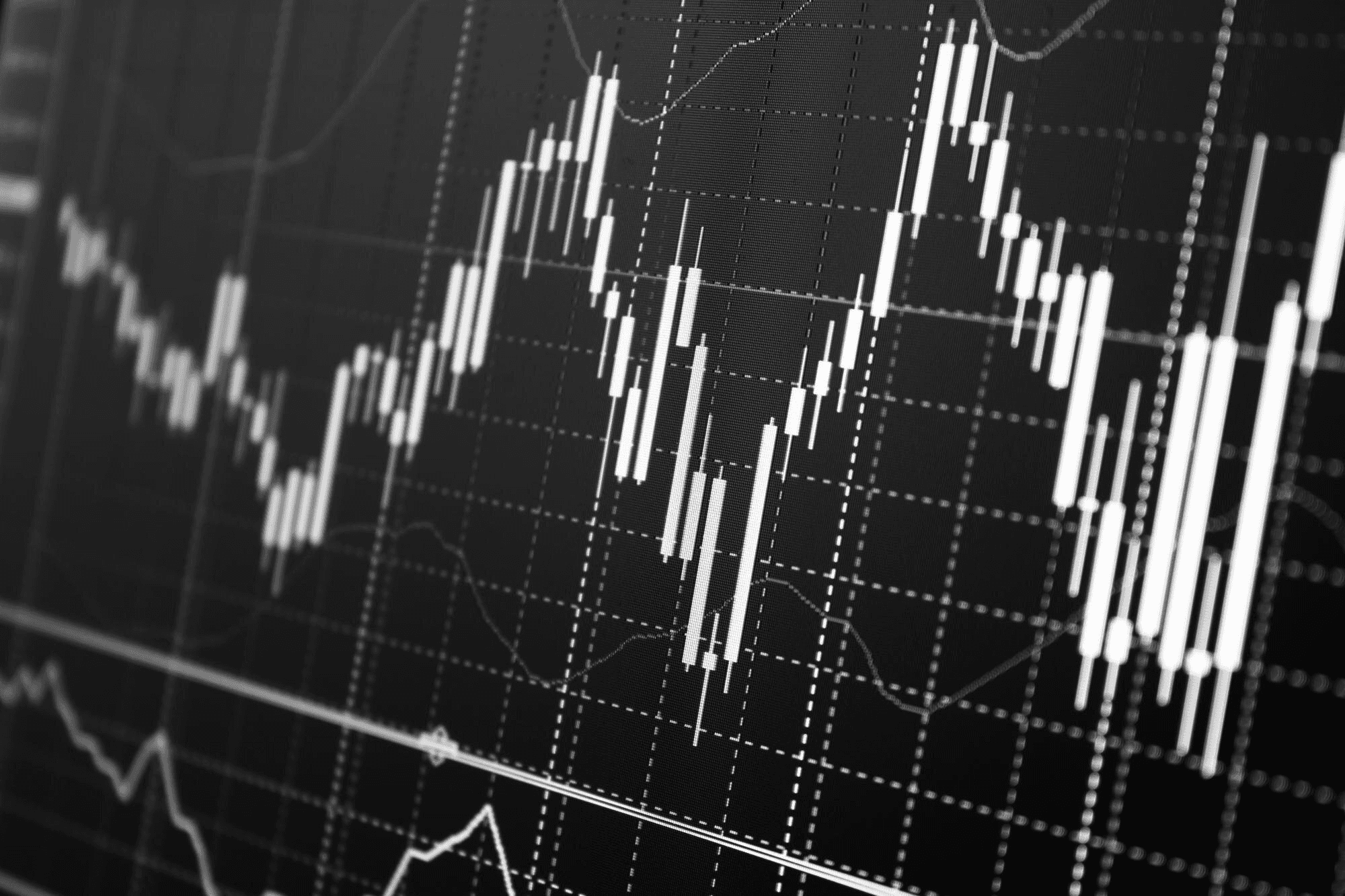
Until now, you only looked at daily candles. One candle per day. But the moment you open a 4-hour or 1-hour chart for the first time, a hidden world opens up. On the daily, it just went up or down. On the hourly, price was bouncing back and forth dozens of times inside that single day. "How did I not know about this?"
Then you discover moving averages.
The 20-day, 50-day, 200-day. Back to YouTube. "What's a golden cross." "What's a death cross." When the 50-day crosses above the 200-day, you buy. When it crosses below, you sell. Clean and simple. For the first time, it feels like you have a real framework.
You also notice the Volume bars sitting at the bottom of the chart. But you don't know what they mean. You see the bars are there, but what to do with them is beyond your interest. You don't know yet that they'll matter later.
You start believing moving averages tell you where price will bounce. When price drops near the 50-day, you think "this is the bounce" and buy. It drops. You sell, and it bounces. So next time, you learn your lesson. "This time I'll hold." You hold. The bounce never comes. Price drills through the floor and heads for the basement.
Sell and it goes up. Hold and it goes down. It feels like the market is reading your order book.
Around this time, people start reacting to you differently. Drop words like "golden cross," "death cross," "50-day support" into conversation and your coworkers look at you with a hint of respect. "Oh, you actually know this stuff?" You don't mind that look at all.
Sitting at your dual monitors, hourly chart open, moving averages layered on, getting it right sometimes, getting called "the guy who knows stuff" at work. It feels like progress.
You do win sometimes. But you lose more often. The gear got upgraded, the vocabulary got bigger, but the account stayed the same.
You don't know yet that the problem was never the setup.
The More You Analyze, the More You Lose
Moving averages aren't enough anymore. There has to be more.
You hit the "Indicators" button at the top of the chart. Another world opens up. RSI, MACD, Stochastic, Bollinger Bands, KDJ. The names alone sound serious. You search them one by one on YouTube. Every video says "this one indicator is all you need." So you add them all.
The chart is buried under indicators. You can barely see where price is. But you believe this is what a professional's screen looks like.
You learn RSI. Above 70 is overbought, below 30 is oversold. Clean and clear. RSI hits 70. "Overbought." You sell. Price keeps climbing. 75, 80, 85. It runs 20% past where you sold. You got out way too early.
So next time, you don't sell. RSI crosses 70 and you hold. "This time it'll keep going." This time it actually reverses. Back to square one.
You start tweaking the parameters. RSI default is 14, but you change it to 7. "Oh, this fits way better." You came to that conclusion by eyeballing three or four past charts. You think that counts as validation. You've never heard the word backtest. Even if you have, you don't know how to do one. You're not even using the kind of indicator that has that capability.
MACD prints a death cross. You short. It doesn't go down. Price touches the lower Bollinger Band. You buy. It goes lower. Every indicator is giving a different signal. RSI says buy, MACD says sell. You don't know which one to follow.
The more you analyze, the more you lose. You can feel it. But if you stop analyzing, you'll probably lose even more. So you can't stop.
Something strange starts happening around this time. People around you start treating you like an expert. "RSI is in oversold territory right now, could see a bounce." "MACD signal just crossed, be careful." Say things like this and to anyone who doesn't know better, you sound like the real deal. You start believing it too. Your account is in the red but your ego is in the green.
By now, you can't sit still. Every time you open a chart, you feel like you have to do something. You analyzed, so you should trade. Sitting on your hands feels like missing an opportunity. You trade three, four times a day. Commissions piling up never enters the equation.
Then as the account shrinks, the thinking shifts. "It's because my capital is too small. If I go bigger, the returns get bigger too." The word leverage starts catching your eye.
Your account is now ready to shrink a little faster.
Same Mistakes, Bigger Numbers
The logic is simple. You've been losing not because you lack skill, but because your capital is too small. At least that's what you tell yourself.
The first time you encounter leverage, it looks like magic. You can open a $5,000 position with $500? You see the number that says 10x returns. The part about 10x losses is in the fine print.
You start cautious. 2x, 3x. You get it right sometimes. When you do, the profit is nothing like before. "Why didn't I do this sooner?" Every trade you ever made without leverage looks stupid. You crank up the multiplier.
5x. 10x. At some point, 20x. When you're right, it's heaven. When you're wrong, a 5% drop used to sting a little. Now 5% is half your account.
Your skill didn't change. Only the bet size did. Same timing, same reasoning, same direction. The only difference is the number of digits in the loss.
When you lose, something breaks inside. "I need to make it back." You raise the multiplier. The revenge trade creates another loss. You try to make that one back too. It's a spiral.
When you're green, you close immediately. Even a small win, you want to lock it in. When you're red, you don't close. It'll come back. You believe that. Small wins, big losses. Every single time. You know this intellectually. Your hands don't listen.
You get in bed. You'll just check one more time. You roll onto your side and peek at your phone. Just a quick look at the position. A quick look turns into 3 AM. You put the phone down and close your eyes. They won't stay shut. You look again. Light starts creeping through the curtains. Sparrows are chirping outside. It's morning. You're not sure if you slept or not. The position is still open.
The account is cut in half. This hurts too much to call "tuition." But you can't stop.
Around this point, you start telling yourself two lies. "Just one more." And "next time will be different."
It's not different.
Someone Promised You a Money Machine
You've tried everything. Moving averages, indicators, leverage. The results only got worse. You're exhausted. But you can't quit. You've come too far. If you stop now, everything you've lost becomes a real loss. And more than anything, you still believe this is the one path that can change your life.
That's when you see it. "AI Trading Bot." "Fully Automated." "Set It and Forget It."
You're skeptical at first. But you scroll down and there are profit screenshots. Upward-sloping equity curves. Clean dashboards full of green numbers.
Half of you doubts it. But you think about it. You did it yourself and look how that turned out. Maybe a machine can do it better? They say emotions are the problem. Machines don't have emotions. This thing might fill every gap you have.
$79 a month. Or $99. Feels expensive at first. But compared to what you've already lost? This is an investment. The self-hypnosis has already begun. You subscribe.
You set it up and let it run. First few days, small profits appear. "Oh, it actually works?" It feels like you've finally found the answer. You thought the nights of clutching your phone and tossing in bed were finally over.
They're not.
"Set It and Forget It," they said. But you can't forget. You keep checking. And the moment you look, you want to lose your mind.
It's going up, why isn't it buying? It's dropping, why isn't it selling? It's in profit, why is it closing already? It's tanking, why is it still holding? In your eyes, it should be buying right now, but this thing just sits there. In your eyes, it should be selling, but it won't budge.
Here's the irony. You keep saying "in my eyes." But those are the same eyes that have been losing money this entire time. You don't realize that.
You can't take it anymore. You intervene. You manually close what the bot opened. You manually buy what the bot didn't. You're running an automated system and trading manually at the same time. The "auto" part is meaningless.
You blame the bot. You change the settings. It gets worse. You change them back. That doesn't work either. You search for another bot. A more expensive one. A better-looking one. You subscribe again.
You cancel. Or you try two or three more before you cancel. What's left is an account that shrank by the cost of all those subscriptions. The hope that a machine would do it for you is gone. The answer was never in there.
You're alone again. Back in front of the chart. YouTube, coworkers, indicators, leverage, bots. You tried it all. None of it worked. For the first time, a real question comes out.
"Then what the hell am I supposed to be looking at?"
That question takes you to the next stage.
What Is the Best Indicator on TradingView
You're back on YouTube. But this time it's different. No more "how to start investing." It's "why RSI doesn't work." "Best indicator combinations." "What indicators do pro traders use." The searches are more aggressive. More desperate.
Then it hits you. Was the way I was reading indicators wrong this whole time? Or are there better indicators out there that I didn't know about? Maybe both.
Somewhere along the way, you discover that custom indicators exist. Not the built-in ones. Tools that traders designed with their own logic. Thousands of them. Tens of thousands. The names sound impressive, and when you read the descriptions, each one feels like the answer.
You start typing in the search bar. "What is the best ind..." You haven't even finished the sentence. Autocomplete fills it in. "What is the best indicator on TradingView." You didn't need to type a single extra letter. Millions of people have already typed that exact sentence. And every one of them walked the same road you did to get here.
You see a good one, you download it. One, two, three. Before you know it, there are ten indicators on your chart. The entire screen is covered in lines and colors. How is this different from when you loaded up RSI and MACD? The tools changed. The behavior didn't. But you believe this time is different. Because these are "custom." Not the same as the default ones.
You add them and the same thing happens. A signal fires, you enter, price goes the other way. You swap the indicator. Swap it again. And again.
But somewhere in this process, something happens that never happened before.
You find a space where other traders post their own analysis. Charts with drawings on them, explanations of why they're buying here, why they're selling there. For the first time, you're looking inside someone else's thought process.
It's not like YouTube. YouTube was an edited show. This is raw. Some people are right, some are wrong. But every now and then, you spot someone who sees the market differently. Not ten indicators stacked on top of each other, but a clean chart with only the key points marked. Not predicting direction, but reading structure.
"What's different about this person?"
If that question comes up, you're already asking a different kind of question. Before, it was "what indicator should I use?" Now it's "how should I be looking at this?"
Getting here cost you money. Cost you time. Cost you sleep. Cost you pride. But you're still here. You didn't quit.
You don't know yet if this door leads to heaven or hell. But one thing is certain. The person standing at this door is not the same person who secretly opened YouTube back in Stage 1.
This is not the end. This is the beginning.
Free on TradingView
What are you still configuring?
While others sell you "highly customizable" and leave you with endless settings to figure out, we eliminated all of them and called it "engineering".
ARES Generation 1
Coming April 22.
Latest


Ready to begin?
A precise tool for those who've already decided how they trade.