The Wire
Dispatch
Latest Opinion
The UAE Quit OPEC. That Is Not a Trade.
A 60-year membership ended in one announcement. The market sees an oil story. The actual story is a country rewriting its operating system.
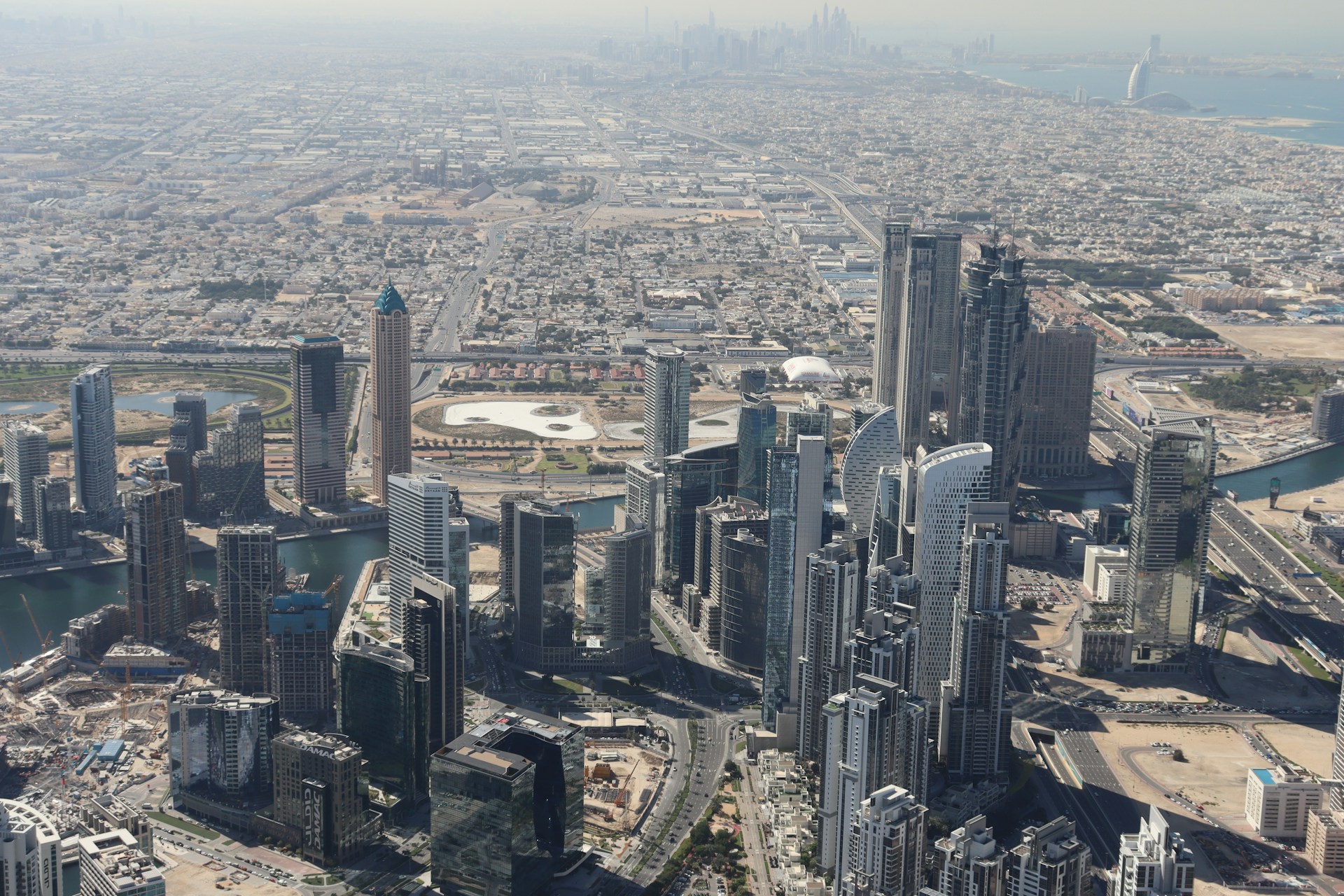
On April 28, 2026, the United Arab Emirates announced it would leave OPEC and OPEC+ effective May 1. After six decades of membership.
Energy Minister Suhail Al Mazrouei called it a policy decision aligned with national interests. No prior consultation with Saudi Arabia. No apologies.
The oil market reacted immediately. Brent was already above $110. Analysts started modeling what happens when a producer with 4.8 million barrels per day of capacity is no longer bound by quota restrictions. The short-term read was simple: more uncertainty. The medium-term read was bearish for crude once Hormuz reopens.
But if you think this is an oil story, you are looking at the wrong chart.
Here are the numbers.
Non-oil sectors now account for over 73% of UAE GDP.
Non-oil trade hit 2.8 trillion dirhams ($762B) in 2024, up 13.6% year over year.
Abu Dhabi posted 6.4% non-oil growth in the first half of 2025.
The IMF projects UAE GDP growth of 4.8% in 2025 and 5.0% in 2026.
Oil exports account for roughly 25 to 30% of national GDP, down from over 60% two decades ago.
Dubai's digital economy is on track to contribute 25% of the emirate's GDP by the end of 2026. DIFC hosts over 1,000 fintech firms. Tourism contributes over 12% of GDP. Emirates Global Aluminium made the UAE the world's fifth-largest aluminium producer.
This is not a petrostate leaving an oil cartel. This is a diversified economy shedding a constraint it no longer needs.
The Saudi Problem
The UAE and Saudi Arabia have been drifting apart for years. On paper, they are allies. In practice, they are competitors.
Saudi Arabia needs OPEC. Its fiscal breakeven oil price runs higher than the UAE's. Vision 2030 is ambitious but behind schedule. The kingdom is projected to run a fiscal deficit of 3.7% of GDP in 2026. Bahrain is worse at 9.9%.
The UAE is running surpluses. The IMF noted the country maintains "ample buffers that can be deployed to respond to adverse shocks." While Saudi Arabia is cutting spending to manage deficits, the UAE is deploying capital into AI, clean energy, pharmaceuticals, and advanced manufacturing.
The coalition that bombed Yemen together in 2015 fractured into recriminations by late 2025, when Saudi Arabia struck what it described as a weapons shipment bound for UAE-backed Yemeni separatists. That is not a policy disagreement. That is a relationship that has structurally changed.
Inside OPEC, the tension was simpler. The UAE wanted to pump more. Saudi Arabia wanted discipline. The quota system capped UAE output at around 3.2 million barrels per day. Without those restrictions, analysts estimate production could nearly double. For a country that has spent 15 years building an economy that does not depend on oil, being told how much oil it can sell by a neighbor that still depends on oil is not a sustainable arrangement.
The War Made It Possible
The Iran war did not cause the UAE to leave OPEC. But it created the conditions.
The conflict wiped out 7.88 million barrels per day of OPEC production in March 2026. That is the biggest supply collapse the cartel has seen in decades. Worse than COVID. Worse than the Gulf War. With the Strait of Hormuz effectively closed, Gulf producers could not ship even if they wanted to.
In that chaos, leaving OPEC carried less immediate consequence. The UAE cannot freely export right now anyway. By the time Hormuz reopens, the exit will be old news. And the UAE will be free to ramp production on its own timeline, at its own pace, answering to no one.
As one energy industry source told The National: "This decision is good for consumers and good for the world. The UAE will gradually increase production to supply global markets, once freedom of navigation is restored."
The timing was not lucky. It was calculated.
What Happens to OPEC
Rystad Energy's head of geopolitical analysis put it plainly. Losing a member with 4.8 million barrels per day of capacity takes a real tool out of the group's hands. When demand is nearing a peak, staying inside a quota system starts to look like leaving money on the table.
Kazakhstan has been pushing against its own quotas for months. Analysts are already floating its exit. If the UAE and Kazakhstan both leave, OPEC stops being a cartel and starts being a Saudi-Russian joint venture with a few tagalongs.
Trump has called OPEC a ripoff. He has linked US military support for Gulf states to oil prices. An OPEC that is visibly fracturing gives the White House exactly the narrative it wants. Whether that narrative produces cheaper oil is a different question, but the political incentive to keep pulling at the thread is obvious.
The real question is whether OPEC can survive as a price-setting mechanism when its second-largest producer is gone, its production base was just hit by the largest supply shock in its history, and the geopolitical alignment that held the group together is actively unwinding.
The Bet
Fifteen years ago, the UAE started investing in sectors that had no immediate commercial case. Clean energy. Healthcare manufacturing. Advanced materials. Fintech infrastructure. At the time, the logic was abstract. Reduce oil dependency before you have to. Build the economy you want before the one you have becomes a liability.
Today, the results are concrete. Masdar just broke ground on a $6 billion round-the-clock renewable energy project, the world's largest battery storage initiative. Mubadala Bio can produce 2.5 billion pharmaceutical units annually. Non-oil exports jumped 45% year over year in the first half of 2025. The country signed Comprehensive Economic Partnership Agreements with India, Indonesia, Malaysia, and Australia, with Japan, Pakistan, and the UK in negotiation.
This is not a country running away from oil. It is a country that built enough outside of oil to walk away from the constraints that come with it. OPEC membership meant coordination, compromise, and deference to Saudi production strategy. For a $500 billion economy with 73% non-oil GDP, that deference stopped making sense.
The Signal
Every country with natural resources faces the same question eventually. Do you manage the resource, or does the resource manage you?
Most resource-rich nations never escape the trap. The revenue is too easy. The political incentive to keep spending is too strong. Diversification gets announced, initiated, quietly shelved when oil prices recover, and re-announced at the next crisis.
Saudi Arabia has done this cycle at least three times. Russia never left it. Venezuela is the cautionary tale. Norway built a sovereign wealth fund but never had to fight a neighbor over production quotas.
The UAE is doing something different. It is not waiting for the post-oil era. It is engineering the transition while oil revenue is still flowing, using that revenue to fund the infrastructure that replaces it. And now it has removed the last institutional constraint on how it manages its own production.
Whether this works is not guaranteed. The Dutch disease risk is real. Emirati participation in the private sector remains low. Regional conflict can derail any plan. And oil still funds the transition.
But the direction is clear. And the OPEC exit is not a reaction to a crisis. It is the punctuation mark on a strategy that has been building for 15 years.
Any country can pump oil. How it leaves the oil era determines whether the world wants to invest there.






Market analysis and trade ideas. Have a ticker in mind? Send us your request.