Volume Analytics
Structure Computed, Not Interpreted
Video Recorded on TradingView
What if volume told you where, not just how much?
Every bar. Every node. Every density cluster. Segmented from the distribution itself.
You open the volume profile. You see the rows. You find the POC. But when price reaches it and nothing happens, you realize you were reading a histogram, not structure.
Standard tools sum volume into rows and leave the rest to you. Where one node ends and another begins, where the real concentration sits, how much of the profile actually matters. That is all on you to figure out.
Volume Analytics removes that guesswork. It segments real nodes from the density landscape, extracts statistically derived cores, and refines the Point of Control through Gaussian interpolation. Every level on your chart is computed, not interpreted, adapting to your visible range in real time with zero configuration.
While others sum volume into rows and call it a "profile," we decomposed it into structure and called it "analytics".
Adaptive Visible Range
01
"Your view defines the analysis."
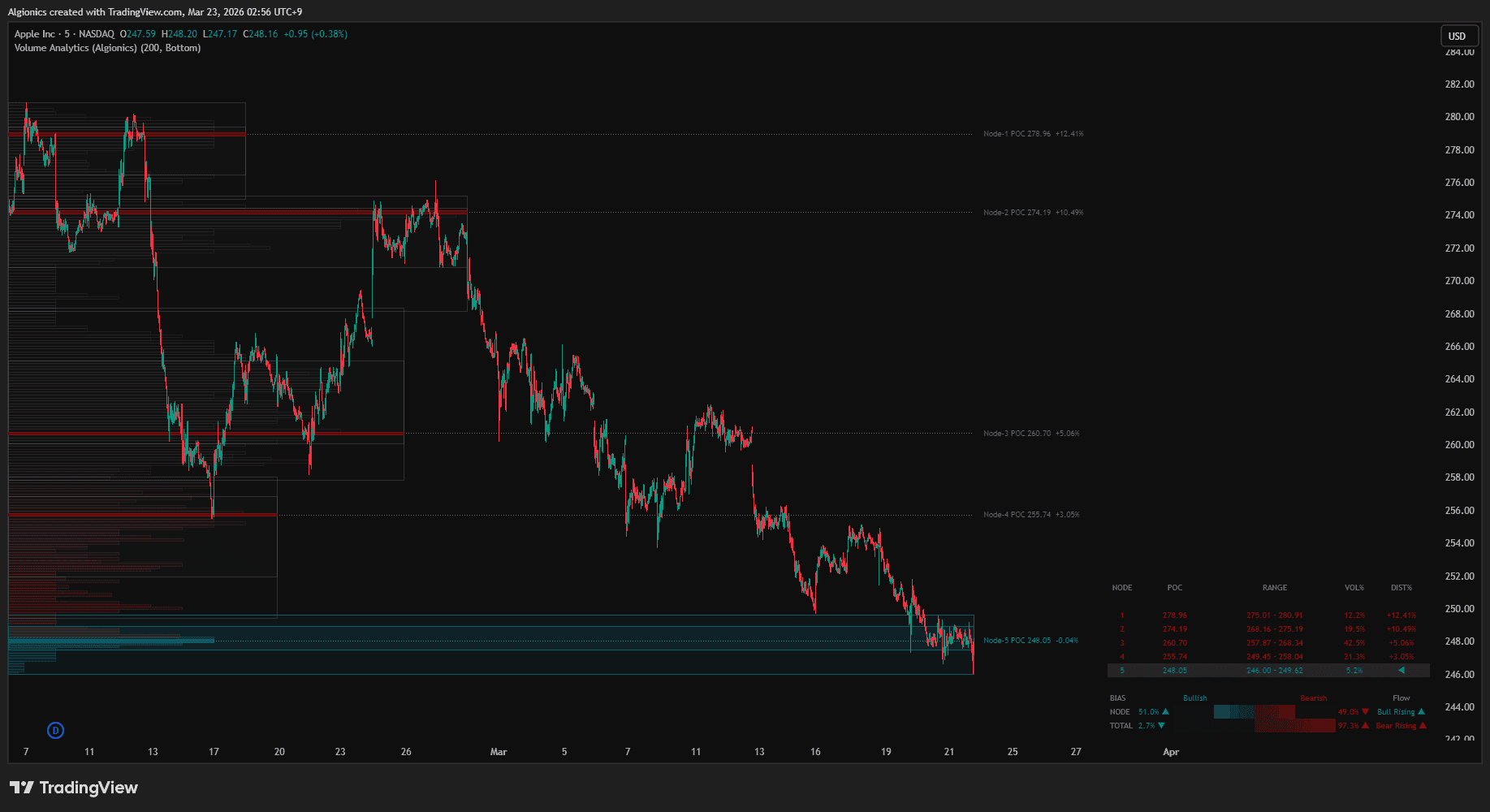
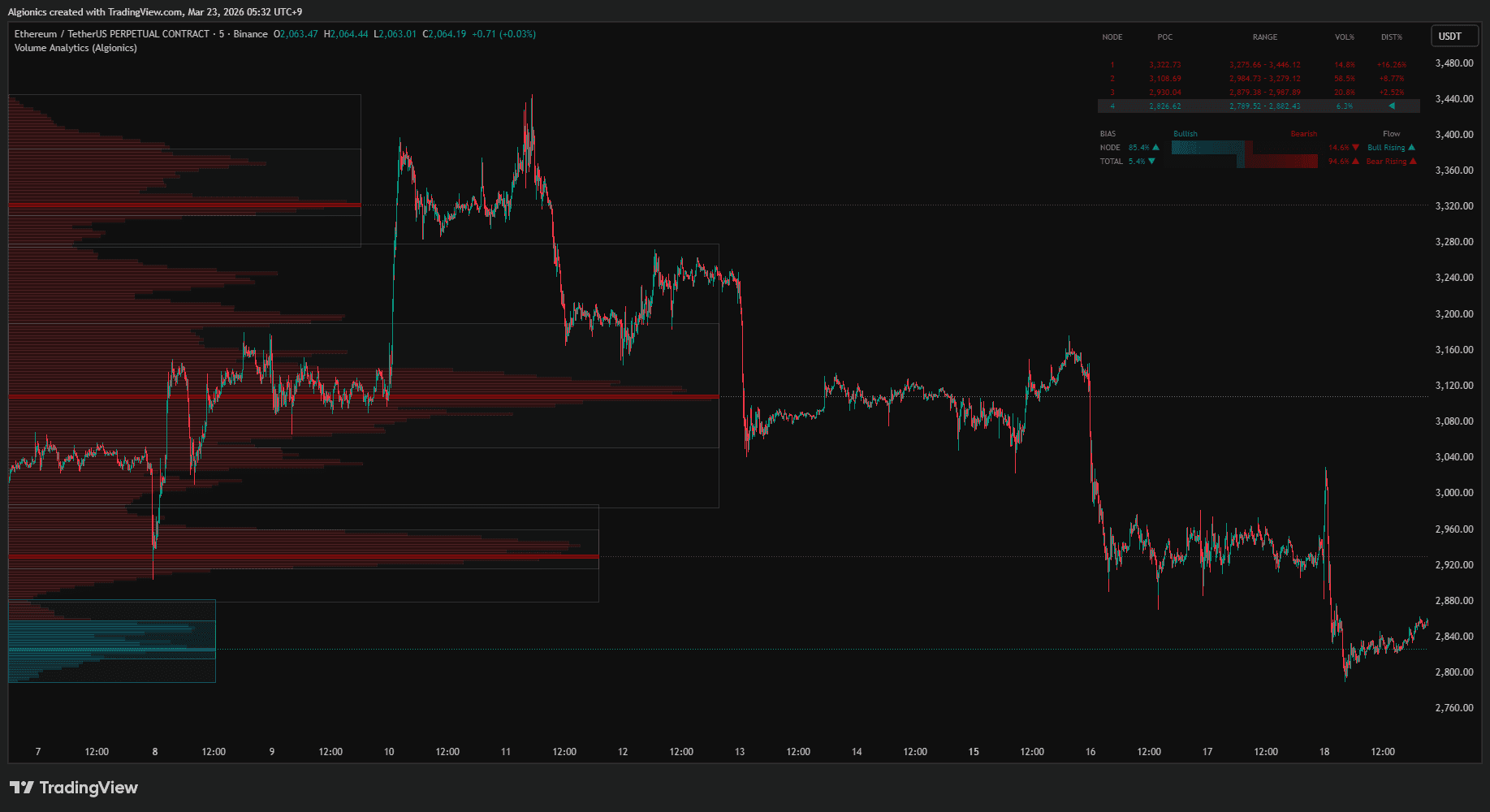
Most volume profiles have a hard ceiling.
They only compute what their lookback allows, cutting off the structure beyond that window no matter how far back the real context begins.
Volume Analytics has no period limit.
It builds the profile from whatever you see, whether that is the last hour or the last three years.
Scroll to any point in history, zoom to any scale, and the full structure is there, computed live from your visible range. The market does not forget, and now your profile does not either.
Auto Node Detection
02
"Nodes you can trust, drawn by math."
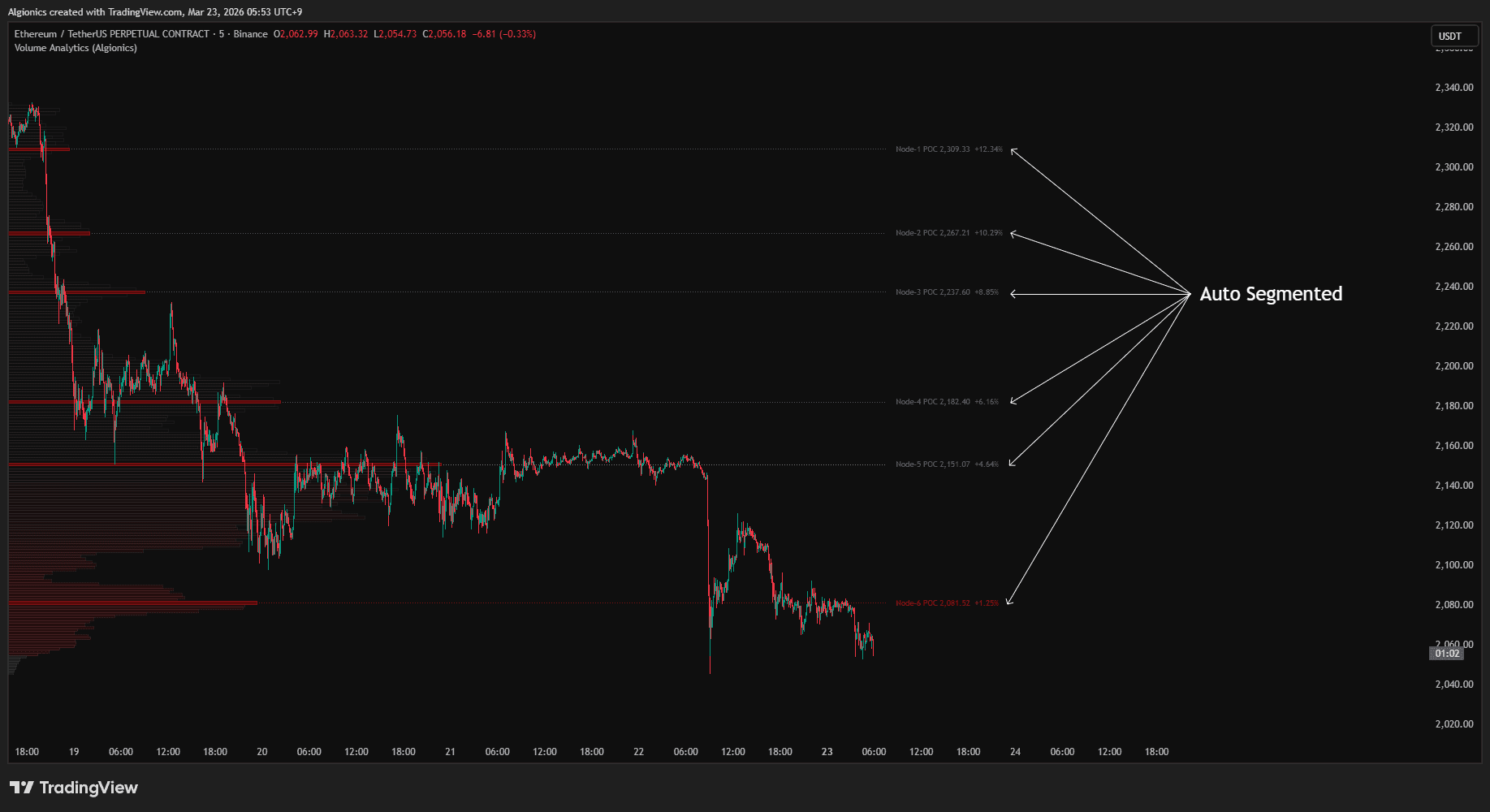
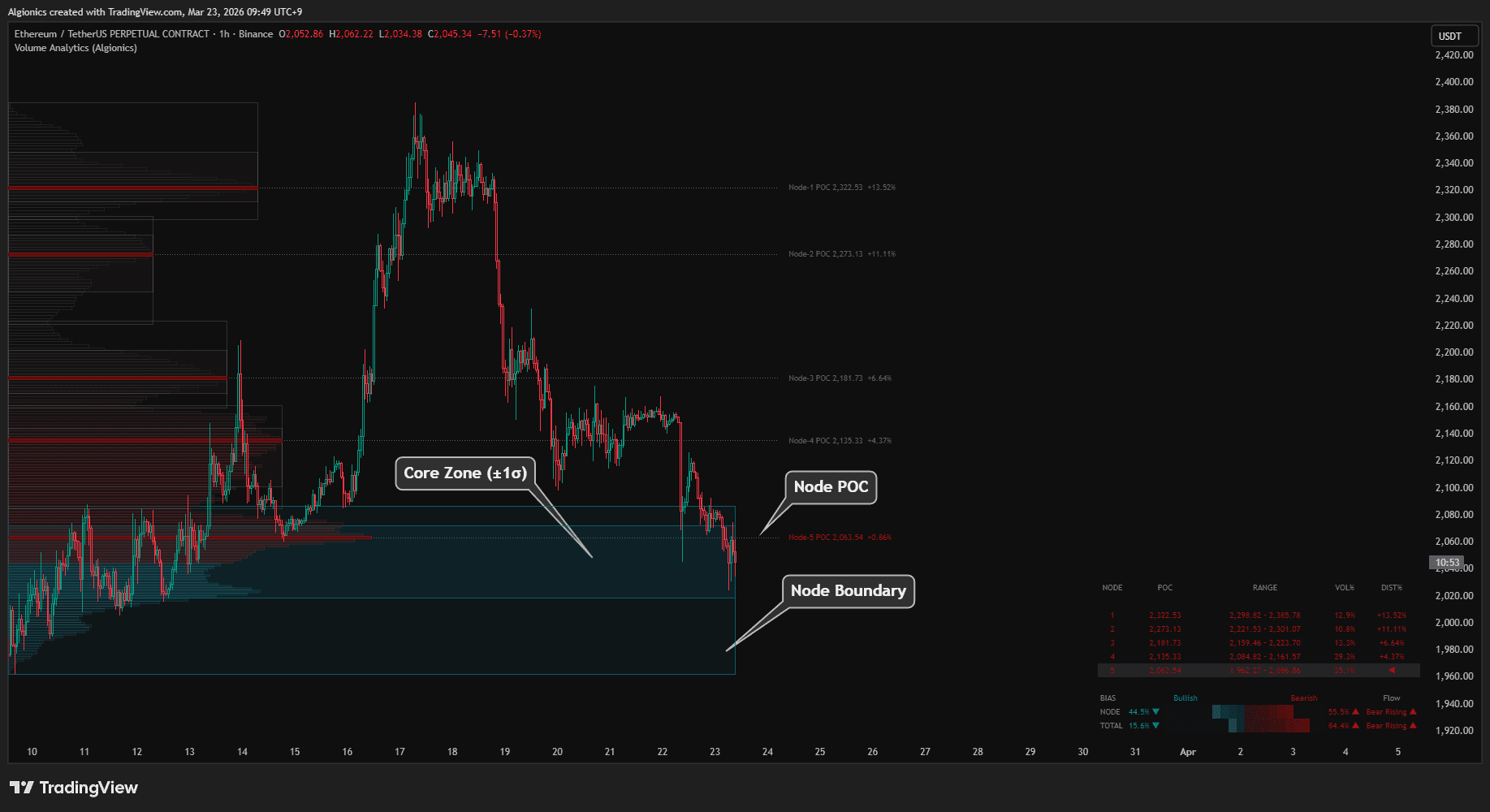
Most volume profiles give you one solid block of data. Where one zone ends and the next begins is left entirely to your eyes.
Two traders looking at the same profile will draw different boundaries, and neither can prove the other wrong.
Volume Analytics segments nodes algorithmically from the density terrain.
It detects natural volume peaks, locates the valleys between them, and draws boundaries where the data actually separates.
Each node gets its own Point of Control, its own core zone, and a clear statistical identity. You stop drawing lines and start reading structure.
Precision Support and Resistance
03
"Levels that react, because the math is exact."
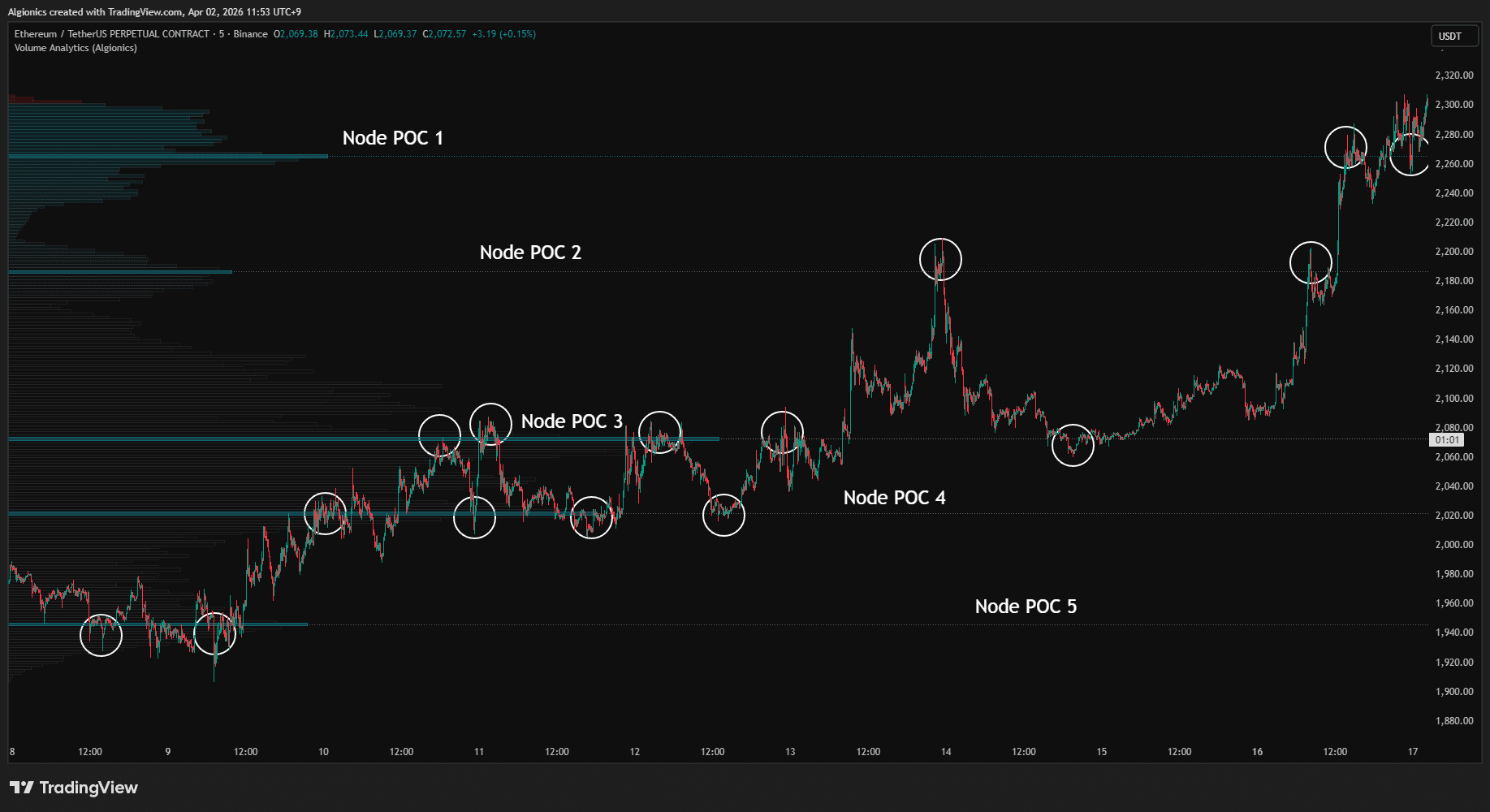
You watch price approach the POC expecting a reaction. It reaches the level, passes through, and nothing happens. The problem is not the market.
The problem is that your POC was a row, not a price, and the real concentration was somewhere else inside that range.
Volume Analytics resolves the POC to an exact price, not the row it sits in.
When price reaches that level, you are looking at where volume actually peaked, not an approximation.
Each node carries its own POC, giving you independent support and resistance references across every structure on your chart.
Live Structural Bias
04
"See who owns the structure."
No volume profile tool shows you this.
A single bar splits the entire structure into bull and bear dominance, live.
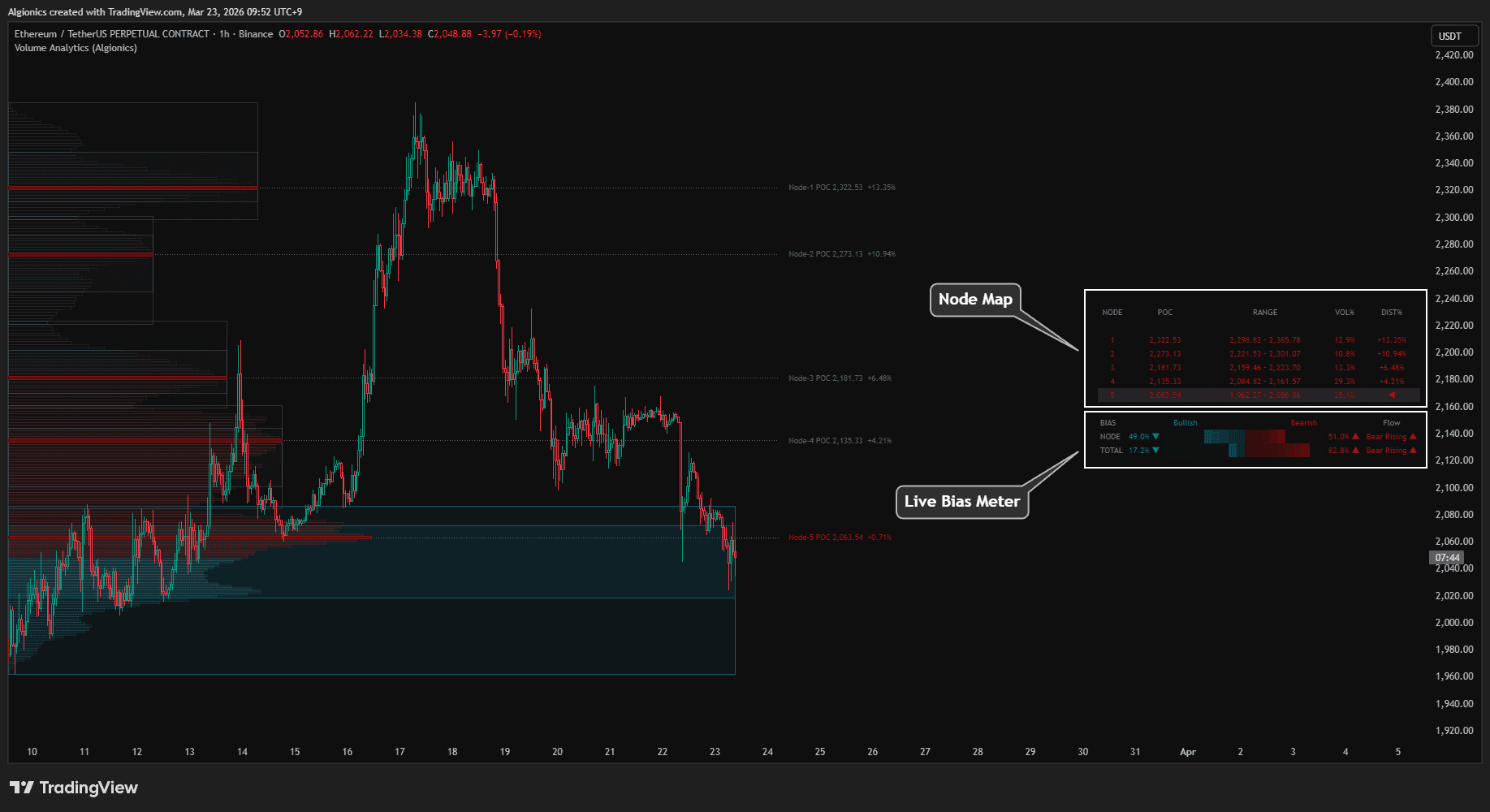
Not just globally, but inside your current node separately, so you see the local fight and the macro verdict side by side. Others give you a profile to stare at. Volume Analytics give you a bias to act on.