Consensus Band
Price forgets. Volume remembers.
Video Recorded on TradingView
What if your levels were built from capital, not price?
Every band. Every boundary. Every zone. Constructed from where volume was actually committed.
You draw support. It holds once, then breaks. You try Bollinger Bands, but those track price deviation, not where trading actually happened. The band holds until it doesn't.
Price-based bands show where price has been. They say nothing about where capital was committed. A level without volume behind it is a line, not structure.
Consensus Band builds every level from real volume distribution across 28 spectral layers. VPOC is where volume peaked. Consensus Area is where the market concentrated. Boundary Band is where structure ends. Nothing is fixed. Everything adapts.
While others draw bands from price and call it "support," we built them from volume and called it "consensus".
Consensus Levels
01
"Peak. Range. Edge."
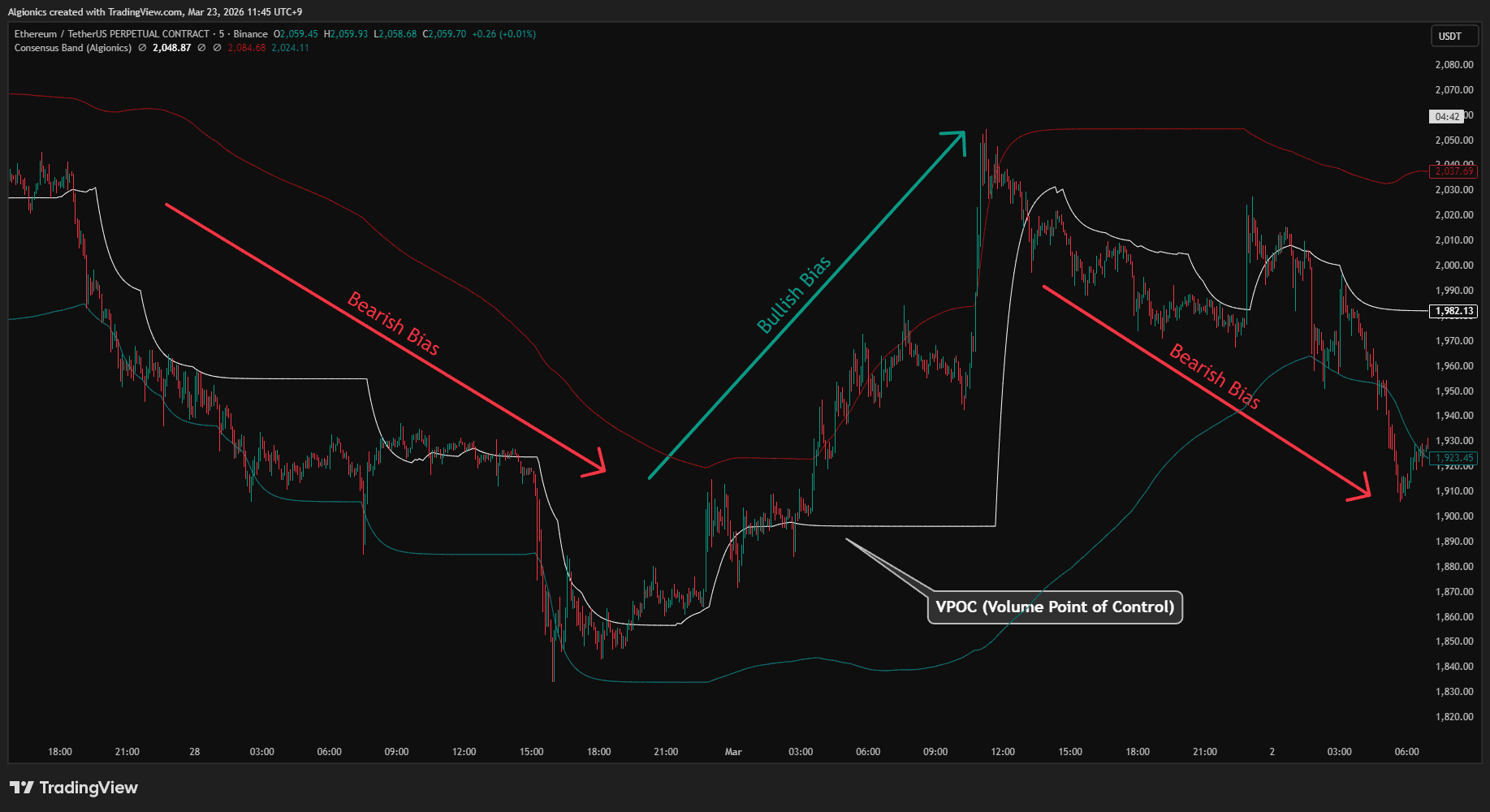
Consensus Band builds levels from volume, not price.
VPOC marks the price the market traded most. The Consensus Area marks the range where capital concentrated. The Boundary Band marks the outer edge, where the market's own structure runs out.
Price inside the Consensus Area means equilibrium. Price beyond the Boundary Band means it has left the structure entirely. You do not interpret the levels. The volume already decided them.
Structural Engine
02
"Stable levels from an unstable market."
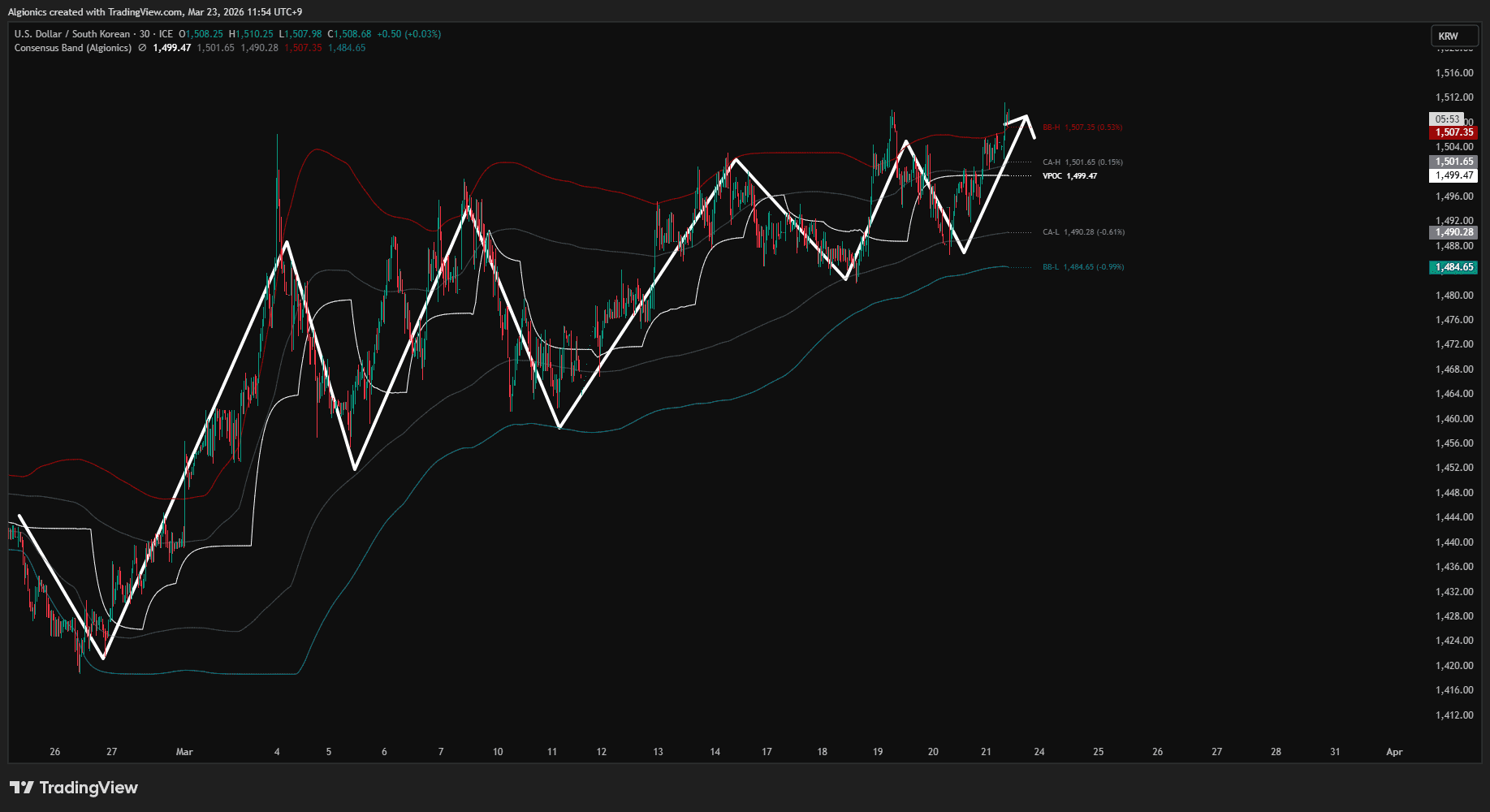
You watch a support level hold for an hour. One large candle prints and the level jumps to a completely different price. Nothing changed in the market. The indicator just recalculated.
You second-guess the entry. You move your stop. You wait for the level to settle. By the time it does, the trade is over.
Consensus Band levels do not jump.
The engine behind the chart absorbs noise and responds only when the market's volume structure genuinely shifts. When the levels move, something real changed. When they hold, you hold.